








The 4130 Trail Is Now Three Bikes
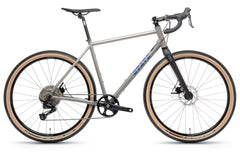
The 4130 Trail didn't get a new frame this year. It got something more useful: pick your fork at checkout and it becomes three genuinely different bikes — a trail hardtail, a fast rigid all-terrain bike, or a loaded bikepacking rig. That one choice changes more than any spec sheet line we could have added. There's also a fourth way to buy it, with no fork at all, for anyone building it up themselves.

When we launched the 4130 Trail, the pitch was simple. Progressive trail geometry, a double-butted chromoly frame, and a parts spec that didn't apologize for the price. The reviews agreed, and a lot of you bought one.
Then we started paying attention to what people did next. Riders were pulling the suspension fork off and running rigid for bikepacking. Others bought the frameset and built it up around a fork already hanging in the garage. A few went the other way and immediately fitted something longer.
So we stopped guessing and made the fork a choice. Here's what changed, and why the rigid versions are a genuinely different bike rather than a cheaper one.
One frame, three bikes
Every 4130 Trail complete bike now ships with a fork option you select yourself. Frame, drivetrain, wheels and finishing kit stay the same. What changes is the front end — and with it, the entire character of the bike. Three of those options are a finished bike. The fourth is a starting point.
 Standard
RockShox Psylo Silver RC — 130mm
This is the trail bike. 130mm of travel on 35mm uppers, with a Motion Control damper and Solo Air spring. At this price you normally get spindly stanchions and a shrug of a damper.
550mm axle-to-crown · 44mm offset · 29 x 2.6" max tire · 5 lb 12 oz
 Rigid
Carbon Rigid MTB Fork
563 grams, and it clears a 32-inch wheel — almost nothing does. Takes 4 lb 6 oz off the front of the bike, which is the one place weight is most obvious.
495mm axle-to-crown · 49mm offset · 29 x 3.0" or 32 x 2.4" · 3 cargo mounts per leg · 1 lb 6 oz
 Rigid
Steel Rigid MTB Fork
Double-butted 4130 chromoly with more places to bolt gear than any fork we make. Nothing to service, nothing to charge, nothing that can lose its damping two days into a tour.
492mm axle-to-crown · 50mm offset · 29 x 3.0" max tire · 5 cargo mounts per leg, plus fender and rack mounts · 4 lb 0 oz

Go rigid and it becomes an all-terrain bike
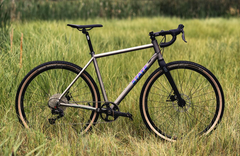
This is the part worth understanding before you choose, because it isn't a small difference. Fitting a rigid fork doesn't give you the same bike with the suspension deleted. It converts a slack trail hardtail into something closer to what the sport used to call an ATB — an all-terrain bike.
That term predates "mountain bike." It's what the Marin klunker crowd called the things they were building before the category had a name, and it's come back around to mean something specific: rigid up front, a lot of tire, nothing to service, and enough mounting points that you can load it up and disappear for a few days. Dirt roads, doubletrack, bikepacking routes, hardpack singletrack, and the commute in between. That's the brief.
What actually changes
Both rigid forks are 55–58mm shorter axle-to-crown than the Psylo. Dropping the front end that far steepens the head angle, lowers the bottom bracket and shortens the wheelbase. The bike gets quicker-steering and sits lower — which is exactly what you want when you're covering ground rather than picking your way down something steep.
Now the part most people get backwards:
Going rigid gives you more tire, not less. The suspension fork tops out at 29 x 2.6". Both rigid forks clear 29 x 3.0".

That matters because on a rigid bike, tire volume is your suspension. Running a 3.0" tire at sensible pressure gets you a lot of the small-bump compliance you gave up at the crown, with none of the weight, service interval, or moving parts. The carbon fork adds its own help here — the layup damps the high-frequency buzz off gravel and hardpack that makes your hands ache after two hours. You still feel the big hits. You stop feeling the constant chatter underneath them.
And you can bolt things to it
A suspension fork structurally can't carry gear. Stanchions and lowers have nowhere to put a bolt, which is why every loaded touring bike you've ever admired is rigid up front.
The steel fork has five cargo mounts per leg — the most of any fork we build — plus proper fender mounts and rack mounts for a front rack, porteur tray or lowrider panniers. The carbon fork carries three per leg and rack mounts, though no fenders. Either way you end up with a bike you can actually load, which the suspension build simply isn't.
Side by side
| Psylo Silver RC | Carbon Rigid | Steel Rigid | |
|---|---|---|---|
| Axle-to-crown | 550mm | 495mm | 492mm |
| Offset | 44mm | 49mm | 50mm |
| Max tire | 29 x 2.6" | 29 x 3.0" · 32 x 2.4" | 29 x 3.0" |
| Weight | 5 lb 12 oz | 1 lb 6 oz | 4 lb 0 oz |
| Saved vs suspension | — | 4 lb 6 oz | 1 lb 12 oz |
| Cargo mounts | None | 3 per leg | 5 per leg |
| Fender mounts | No | No | Yes |
| Rack mounts | No | Yes | Yes |
Both rigid forks ship with a 300mm uncut steerer and a 15 x 110mm thru-axle, post mount for a 160mm rotor. The 4130 Trail runs 180mm rotors front and rear, so a rigid swap needs the matching +20mm adaptor — the steel fork includes one in the box.
One more thing the carbon fork does

It clears a 32-inch wheel. The 32er is the newest wheel size in mountain biking, and the thing holding it back is that almost no fork on the market has room for one. We've run this fork with a 32 x 2.4" tire.
There's a neat side effect if you go that route: a 32-inch wheel stands taller than a 29, which lifts the front end and slackens the head angle back out. On a frame drawn around a longer suspension fork, that height partly cancels the drop from the shorter rigid crown — so a 32er build actually sits closer to the original geometry than a 29er build on the same fork. Worth knowing that 32-inch wheels, tires and rims are still a young standard with limited availability, and you'll want to check rear clearance before committing.

A new colorway: Hammered Tobacco Powdercoat
Joining Raw Phosphate and Sagebrush Green is Hammered Tobacco Powdercoat — a dark bronze-brown speckled metallic that looks considerably more expensive in person than it has any right to. It's the first of our "Hammered" finishes, and it does something the raw finish can't: it hides trail rash.
 Raw PhosphateBare, industrial, patinas with use.
 Sagebrush GreenMuted desert green, matte.
 Hammered Tobacco PowdercoatNew. Dark bronze metallic with a speckled hammer finish.
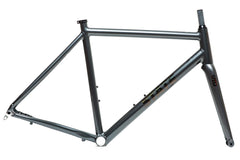
All three are available across every fork option, both drivetrains, and as a frameset.
Two drivetrains, four sizes
Pick a 12-speed mechanical build or go wireless with SRAM Eagle AXS. The AXS builds run the same frame and the same four fork options — the difference is the shifting, and whether you'd rather charge a derailleur or adjust one.
Sizes run XS/S (38cm) through X-Large (46cm), covering riders from 5'1" to 6'5". Every frame gets a Universal Derailleur Hanger, a 31.6mm seat tube with internal dropper routing, and clearance for big rubber out back.
What it costs
| Fork | 12-Speed Mechanical | SRAM Eagle AXS |
|---|---|---|
| RockShox Psylo Silver RC (130mm) | $1,499.99 | $1,999.99 |
| Carbon Rigid | $1,399.99 | $1,899.99 |
| Steel Rigid | $1,199.99 | $1,699.99 |
| No Fork | $1,099.99 | $1,599.99 |
Framesets are $495 in all three colorways, with the same four fork choices available separately.
What the press said
None of the above would matter much if the underlying bike weren't good. It is, and we didn't have to say so ourselves:
Which one should you buy?
Suspension if you ride rough, steep, technical ground and want the slack 65° geometry those reviews describe. This is the bike the frame was drawn around, and nothing else here replaces it when the trail points down.
Rigid carbon if you want the fastest, lightest version. Four and a half pounds off the front end changes how the bike accelerates, how the front wheel lifts, and how it feels at the top of every climb. Fire roads, long days, mixed-surface routes where you'll cover more ground than you planned to.
Rigid steel if you're loading it up. Thirteen mounting points across both legs, fenders for February, and a fork that doesn't care how much weight you hang off it or how hard you scratch it.
No fork isn't a bike yet — it's the frame-up route, for riders who already know what they want up front or are building over a winter. Add one of the three above, or anything matching a 550mm axle-to-crown, and you have a complete bike.
Frequently asked questions
Is the 4130 Trail a good budget trail bike?
It's a double-butted 4130 chromoly hardtail with a 65° head angle, a 130mm RockShox Psylo Silver RC fork, a Universal Derailleur Hanger and internal dropper routing, starting at $1,199.99 with a rigid fork or $1,499.99 with suspension. BIKE Magazine wrote that "a mountain bike of this caliber has no business being under $2,000," and Pinkbike placed its geometry in the same territory as bikes from their Value Bike Field Test.
Can you use the 4130 Trail for bikepacking?
Yes, and the rigid steel fork option is built for it. That fork carries five cargo mounts per leg — thirteen mounting points across both legs once you count fender and rack mounts — and clears a 29 x 3.0" tire. A suspension fork structurally can't carry gear, because stanchions and lowers have nowhere to put a bolt, which is why loaded touring bikes are rigid up front.
Should I choose the suspension fork or a rigid fork?
Suspension if you ride steep, rough, technical trail — that's what the frame's geometry was drawn around. Rigid if you cover ground: fire roads, doubletrack, mixed-surface routes, or loaded touring. The rigid forks are 55–58mm shorter axle-to-crown, which steepens the head angle, lowers the bottom bracket and shortens the wheelbase. It becomes a faster-handling all-terrain bike rather than the same bike with the suspension removed.
What's the difference between the steel and carbon rigid forks?
Weight versus carrying capacity. The carbon fork is 563 grams and takes 4 lb 6 oz off the front of the bike, with three cargo mounts per leg and rack mounts but no fender mounts. The steel fork weighs 4 lb 0 oz, saving 1 lb 12 oz against the suspension fork, and carries five cargo mounts per leg plus fender and rack mounts. Pick carbon to go fast, steel to go loaded.
What size tires does the 4130 Trail fit?
Up to 29 x 3.0" with either rigid fork, or 29 x 2.6" with the RockShox Psylo suspension fork. Frame clearance at the rear is 29" up to 2.6" or 27.5" up to 3.0". Going rigid actually gives you more tire clearance, not less — which matters, because on a rigid bike tire volume is your suspension.
Does the 4130 Trail fit 32-inch wheels?
The carbon rigid fork does, run with a 32 x 2.4" tire — it's one of very few rigid forks on the market with room for a 32er. Check rear clearance before committing, since the fork handles the front but the frame has to handle the back. A 32" wheel also stands taller than a 29, lifting the front end and slackening the head angle back out, so a 32er build sits closer to stock geometry than a 29er build on the same fork.
What's the cheapest way to buy a 4130 Trail?
$1,099.99 for a complete bike with no fork, if you're supplying your own front end. The cheapest rideable build is $1,199.99 with the steel rigid fork. Framesets are $495 in all three colorways.
What is an ATB, and why call it that?
ATB stands for all-terrain bike, a term that predates "mountain bike" — it's what the Marin klunker crowd called the bikes they were building before the category had a name. It's come back to mean something specific: rigid up front, a lot of tire, nothing to service, and enough mounting points to load it up and disappear for a few days. Fit either rigid fork to the 4130 Trail and that's what you have.
Three colorways, three forks, two drivetrains, four sizes — and a frameset if you'd rather start from scratch.
